
NEWS
Researching Roles and Religious Belief

A half-day exploring chaplaincy roles and how religion influences behaviour with input from Martin Walton and Shola Oladipo
29th November, 09:00 - 13:45
Tickets are available from Eventbrite here.
Martin Walton is professor emeritus of chaplaincy studies at the Protestant Theological University in the Netherlands. Born in the USA (Corpus Christi, Texas 1953) as a son of a Methodist minister, he received a Bachelor of Liberal Arts from the Colorado College. After two years in Berlin doing ecumenical work, he studied theology at the University of Leiden in the Netherlands where he received his PhD in theological ethics. For four years he served as a minister of a local congregation of the Reformed Church in the Netherlands and for fifteen years as a chaplain in mental health care, before receiving a position at the Protestant Theological University. His primary research interests have been interpretations of chaplaincy care by patients, conceptualizations of the domain of chaplaincy and case studies in chaplaincy.
Martin will present on:
Session 1: Case Studies Research. The Dutch Case Studies Project in Chaplaincy Care was a five year endeavour (2016 to 2021) in which about 60 chaplains worked with academic researchers in six research communities providing detailed descriptions of encounters with others in care settings, prisons and the military. The overall research question was: What do chaplains do, for what reasons and to what ends? Besides formulating a concise answer to the research question, I will offer some insights drawn from the cases with regard to use of ritual, counselling and methodology, the role of aesthetic aspects and outcomes of care. I will then offer some general observations on the participating chaplains, and then turn to reflect on the method, format and challenges of the research itself.
Session two: Roles of Chaplains. Much has been written in recent years on the functions and competences of chaplains. I want to address the question what roles might the chaplain fulfil in order to exercise those functions and competences in an optimal and facilitating fashion. After first considering some ways in which roles and images of the pastor have been addressed, I will propose four role formulations, each of a slightly paradoxical nature: expert learner, welcoming guest, accompanying artist and distinctive colleague.
Shola Oladipo is a PhD candidate at Coventry university. Her research paradigm centres on the role of Black Majority Church Leaders (BMCL) and health inequalities. Shola is also a church leader, registered dietitian and entrepreneur. She oversees a community interest company – Food for Purpose; which supports ethnic faith communities with culturally relevant health solutions to support healthy living.
Alongside culture and traditional beliefs, health perceptions are influenced by religion and faith in the Black community. The Black majority church (BMC) is particularly prominent in South London, and studies show that Black majority church leaders (BMCL) are viewed as role models and decisions makers; instrumental in influencing health choices and behaviours. In her 2 sessions Shola will present findings from studies involving BMCL in South London
Session 1 - Perceptions of BMCL relating to health and causes of illness. A socio-cultural lens was employed to explore the perceptions of illness causation amongst participants in this qualitative study. Using the Common-Sense Model of illness perceptions to categorise data, findings from this study describe the views of South London based Black Majority church leaders (BMCL).
Session 2 - Response of BMCL to COVID-19 vaccine campaign in UK. Since the rollout of COVID-19 vaccines in the UK, data from surveys have indicated greater vaccine hesitancy among people from Black African – Caribbean communities. This qualitative study examined the responses of BMCL in South London, with respect to the COVID-19 vaccine campaign. The Health Belief Model (HBM) theory was used as a framework to inform this study design to access constructs which are known to influence health behaviours related to vaccination.
Timetable
08:45 Gathering
09:00 Welcome/Introduction/Opening Reflection
09:10 Shola 1
09:55 Short break
10:00 Martin 1
11:15 Break
11:25 Martin 2
12:40 Short break
12:45 Shola 2
13:30 Short Plenary
13:40 Closing prayer/reflection
13:45 Close
Note: If you are a Free Church Healthcare Chaplain, please contact Thandar at info@freechurches.org.uk for a discount code.
Photo credit: Photo by Markus Winkler at Pexels
WEBINAR INVITE from CTBI: The Churches' engagement with the Police on critical incidents


You are invited to attend ‘The Churches’ Engagement with the Police on Critical Incidents’ webinar taking place on Thursday 29 September, 7.30pm – 9.00pm, via Zoom.
Following the fatal Metropolitan Police-related shooting of Chris Kaba in south London on 5 September 2022, churches and faith-based organisations have appealed for compassion and justice for a wounded community.
This webinar, hosted by The Racial Justice Advocacy Forum (RJAF), looks at how churches and parachurch groups have experience in working as conduits in communities that have been alienated from the police, and are able to offer support to those who are seeking to develop a dialogue around these concerns.
Join us on this webinar that aims to better equip churches and communities to respond to critical incidents, and to engage with the police to build a safer society. REGISTER FOR THIS WEBINAR
The statement issued by churches following the shooting of Chris Kaba can be found on the CTBI website.
If you have any questions regarding this webinar, please do not hesitate to contact communications@ctbi.org.uk.
CTBI Communications
Churches Together in Britain and Ireland
Interchurch House
35 Lower Marsh
London SE1 7RL
T: +44 (0) 20 3794 2288 M: +44 (0) 7932 534333

Churches working together to offer ‘Warm Spaces’
Many people are concerned about living costs and the ability to heat their homes this Winter. There is a practical way in which churches may be able to provide support within their local communities by offering ‘Warm Spaces’. Churches may not be able to do this on their own but by working together with other churches it may be possible. Please follow the link for information on resources that will help churches in taking the first steps to opening spaces in their buildings to provide warm hubs.
Over 50 faith and charity leaders have called on the Prime Minister to prioritise support for the poorest in their cost of living announcements, ahead of Friday’s fiscal statement

Leaders from faith communities, charities, front-line support organisations and trade unions have signed an open letter to Prime Minister Liz Truss, urging her to “ensure that people on the lowest incomes have enough to live in the months ahead”.
The letter reads:
“As faith groups, charities, trade unions and front-line organisations we have seen the cost of living emergency escalating not only in the statistics but in the lives of people we meet day to day, in foodbanks, debt centres and in our places of worship. The least well off in our communities are facing the sharpest end of this crisis, and without substantial support will be dragged into destitution.
It is the urgent, moral responsibility of the Prime Minister to ensure that people on the lowest incomes have enough to live in the months ahead. Spiraling costs are affecting everyone, but for those who were already fighting to keep their heads above water this winter’s challenges will be a matter of life and death.”
The release of the letter coincides with new analysis from Prof Donald Hirsch, which calculates that despite the Energy Price Guarantee announcement made by the government on 8 September, a family of four receiving Universal Credit will still require an additional £1,391 over the next six months to stay warm and fed. It comes ahead of the government’s planned fiscal statement, where they are due to announce further measures targeted at combatting the rising cost of living. So far, the government have not announced any plans to increase direct support to households.
The letter is signed by 52 charity, faith and community leaders, including representatives from The Methodist Church, The Muslim Council of Britain, The Hindu Council UK and Jewish leaders from the across the UK, as well as charities and organisations such as The Food Foundation, the Child Poverty Action Group, Action for Children, The Big Issue and The Trussell Trust. Many charities and faith groups who provide direct support to the poorest households in communities across the UK through foodbanks, debt centres and warm banks, are also facing challenges in keeping up with increased demand amidst rising costs.
The letter calls for targeted financial support which takes into account family size and need, is distributed quickly and in amounts large enough to enable families to live decently this winter and beyond. The signatories argue that “increases in poverty and destitution because of this crisis are not inevitable, if government, business and civil society recognise that this is an emergency and act now”, and call on the government to use the tools at their disposal to urgently deliver support.
ENDS.
NOTES TO EDITORS:
For further information, contact:
Hannah Fremont-Brown
The Methodist Church
fremont-brownh@methodistchurch.org.uk
020 7467 5101
You can read the full text of the letter here: https://jpit.uk/enoughtolive.
The full list of signatories is:
Rabbi Robyn Ashworth-Steed, Chair, Tzelem: The Rabbinic and Cantorial Call for Social and Economic Justice in the UK
Rabbi Charley Baginsky, Chief Executive Officer, Liberal Judaism
Revd Fiona Bennett, Moderator of General Assembly, United Reformed Church
Rabbi Rebecca Birk, Co-Chair, Conference of Liberal Rabbis and Cantors
Anna Bland, Team Leader, Leeds Sanctuary
Anthony Boateng, Vice-President of the Conference, The Methodist Church in Britain
Dr Nicola Brady, General Secretary, Churches Together in Britain and Ireland
Rabbi Janet Burden, Rabbi Emerita, Ealing Liberal Synagogue
Heidi Chow, Executive Director, Debt Justice
Niall Cooper, Director, Church Action on Poverty
Kevin Courtney and Dr Mary Bousted, Joint General Secretaries, National Education Union
Sister Colette Cronin, Leader, Institute of Our Lady of Mercy
Colin Date, Acting Chair, Christian Concern for One World
Sister Lynda Dearlove rsm, CEO, women@thewell
Claire Donovan, Head of Research, Policy & Campaigns, End Furniture Poverty
Bishop Terry Drainey, Chair and Bishop, Catholic Social Action Network & R.C. Diocese of Middlesbrough
Alison Garnham, Chief Executive, Child Poverty Action Group
Ben Gilchrist, Chief Executive, Caritas Shrewsbury
Rabbi Aaron Goldstein, Senior Rabbi, The Ark Synagogue
Rev James Green, Executive Director, Together Liverpool
Revd. Lynn Green, General Secretary, Baptist Union of Great Britain
Mia Hasenson-Gross, Director, René Cassin
Revd Ruth Harvey, Leader, The Iona Community
Joseph Howes, CEO, Buttle UK
Imran Hussain, Director of Policy & Campaigns, Action for Children
Rabbi Richard Jacobi, Minister to the congregation, East London and Essex Liberal
Synagogue
Rabbi Neil Janes, Rabbi, South Bucks Jewish Community (constituent of Liberal Judaism)
The Most Reverend Andrew John, Archbishop of Wales, The Church in Wales
Rabbi Gabriel Kanter-Webber, Minister, Brighton and Hove Progressive Synagogue
Mr. Rajnish Kashyap MCICM, General Secretary, Hindu Council UK
Peter Kelly, Director, Poverty Alliance
Paul Kissack, Chief Executive, Joseph Rowntree Foundation
Rabbi Monique Mayer, Bristol and West Progressive Jewish Congregation
Gareth McNab, Head of External Affairs, Christians Against Poverty
Paul McNamee, Editor, The Big Issue
Rabbi Lea Mühlstein, Senior Rabbi, The Ark Synagogue
Zara Mohammed, Secretary-General, Muslim Council of Britain
Patrick O'Dowd, Director, Caritas Diocese of Salford
Helen O’Shea, National President of St Vincent de Paul Society
Emma Revie, CEO, The Trussell Trust
Father Dominic Robinson SJ, Chair, Archdiocese of Westminster Justice and Peace
Revd Paul Rochester, General Secretary, Free Churches Group
Revd. Ian Rutherford, Chair, Greater Manchester Food Security Action Network and City Centre Minister, Methodist Central Hall Manchester.
Adam Scorer, Chief Executive, National Energy Action
Mr Paul Southgate, Chair of Trustees, The National Justice and Peace Network
Most Reverend Mark Strange, Bishop of Moray, Ross and Caithness, and Primus, Scottish Episcopal Church
Anna Taylor, Executive Director, The Food Foundation
The Revd. Graham Thompson, President of the Methodist Conference, The Methodist Church of Britain
The Reverend James Tout, Chaplain to the Archbishop of Wales, The Church in Wales
Fr Adrian Tuckwell, Caritas Hexham and Newcastle
Jo Wittams, Co-Executive Director, The Equality Trust
The State Funeral for the late Queen Elizabeth II
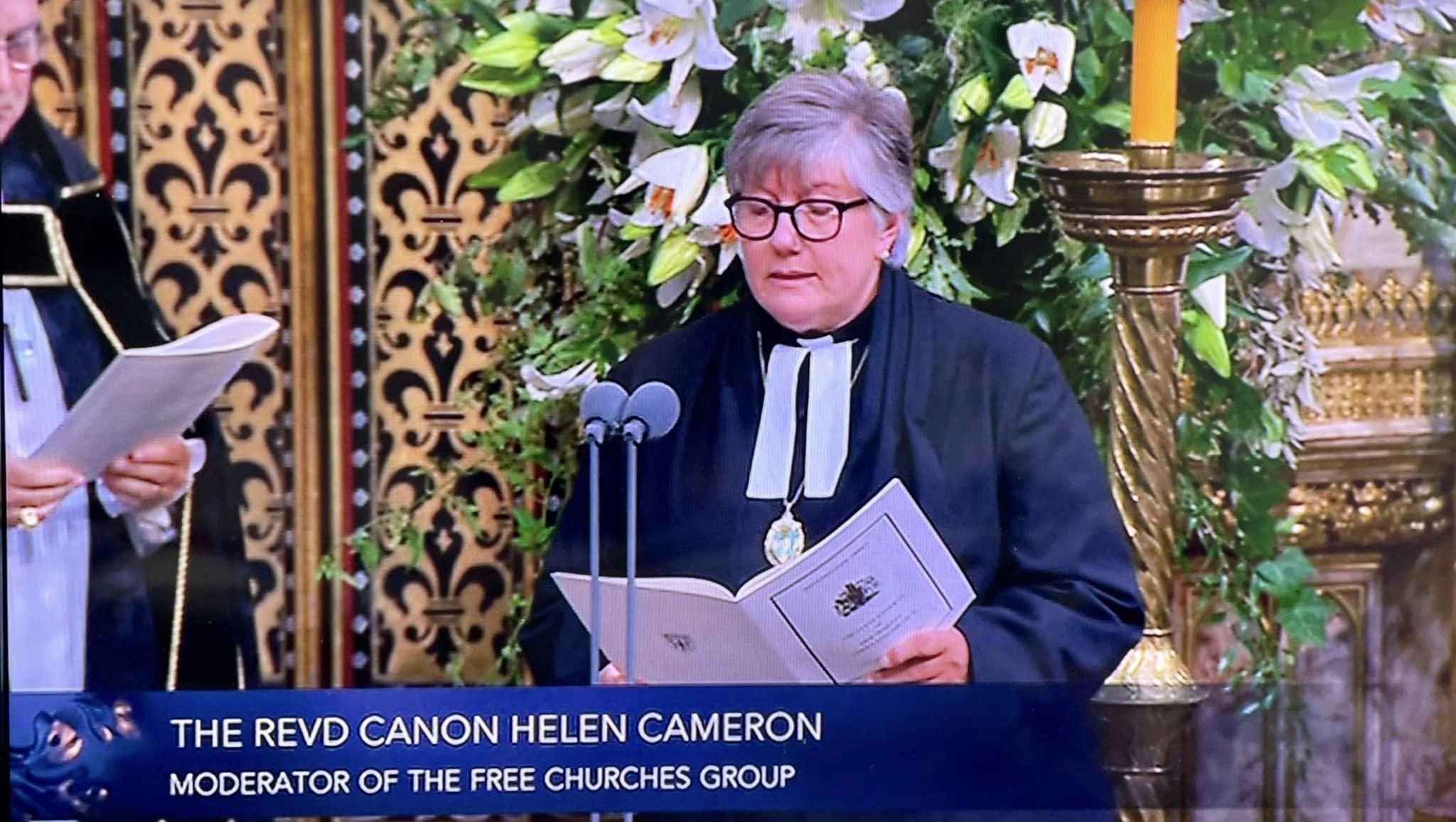
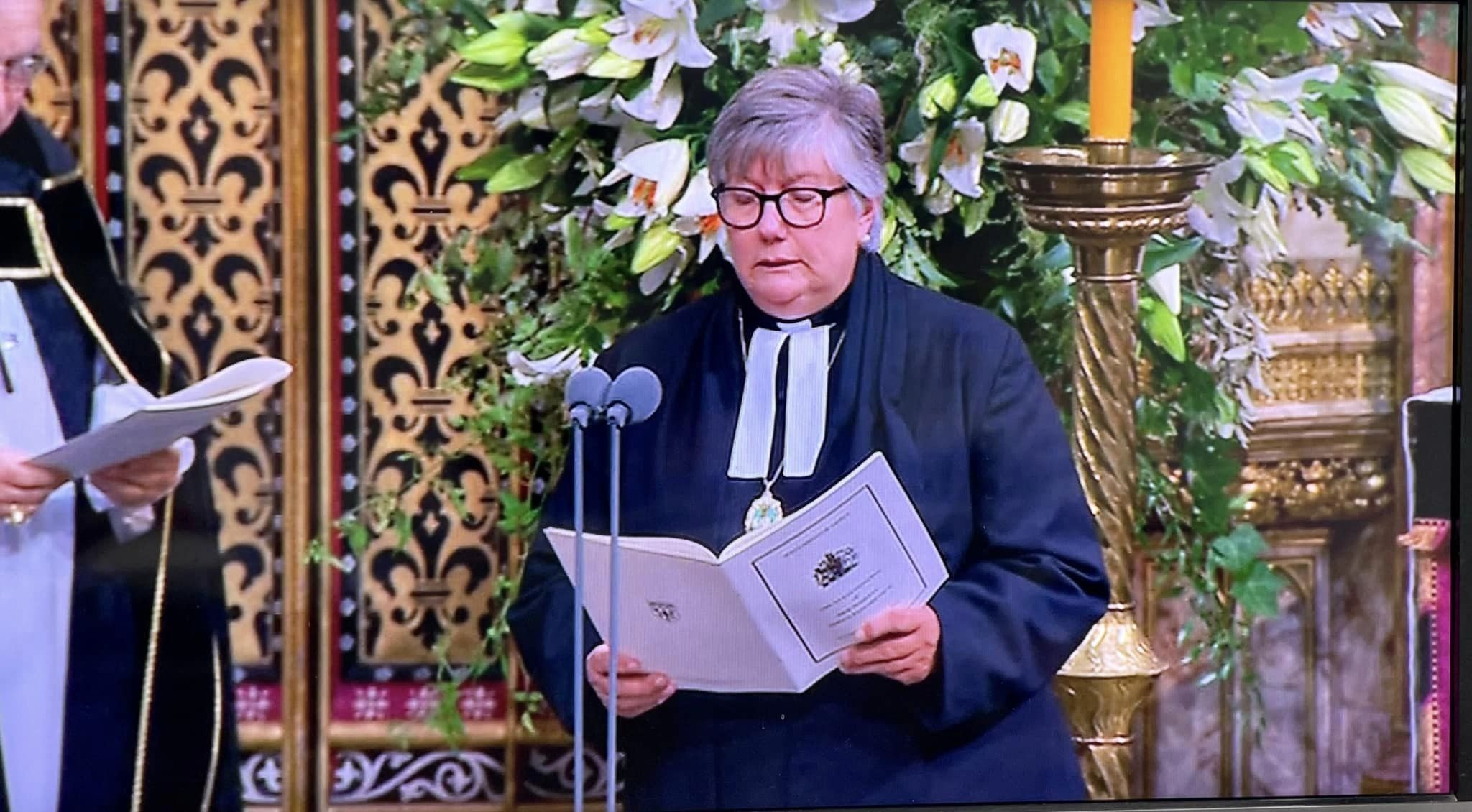
It was a very great privilege to be present for, and take part in the funeral for the late Queen in Westminster Abbey. I was particularly glad that the Free Churches were represented so publicly at a key moment of national importance. I was therefore honoured not just to be present, and to process into the Abbey but also be asked to lead prayers alongside the Bishop of London and the Archbishop of York, the Moderator of the Church of Scotland, Shemara Fletcher of Churches Together in England and Archbishop Cardinal Vincent Nicholls. The prayer I was asked to read acknowledged the long service of Queen Elizabeth II and prayed both for our nation and for our leaders that they would be faithful and honest. It seemed a very fitting prayer to offer. My head and my heart are still very full of memories not least the rich encounters between ecumenical senior leaders and inter-faith guests as we waited to process into the Abbey.
All this followed an audience with King Charles III at Buckingham Palace on the Friday evening. He had just arrived back into London from Cardiff 15 minutes before we arrived, and after the time he spent with us, he later went and kept the Vigil of the Princes with his sister and two brothers at his mother’s lying in state. Despite the tightness of this schedule the King spoke to everyone present and I was therefore able to offer him personally the condolences and sympathies of the Free Churches and assure him of our prayers. He asked me to thank you for your prayers in his bereavement and as he takes up new responsibilities. I told him a little of our work and mentioned the work in particular in prisons, hospitals, military and higher education chaplaincies. He was interested that we co-operated together in such work.
On a lighter note as I was leaving Westminster Abbey after the funeral I bumped into President Biden and Dr Jill Biden. I gave the President our best wishes and he said, Thank you Ma’am!
The Revd Canon Helen Cameron
Moderator of the Free Churches Group