

NEWS
Interview Coaching for Chaplaincy Posts Webinar

11th November 2026, 6:30 pm - 8:00 pm
Boost your confidence and sharpen your chaplaincy interview skills with expert tips and real‑world examples.
Although selection processes often involve more than just a panel interview, an interview is still a critical part of the process. How you do at the interview will significantly impact your chances of being offered a job. Good interview preparation reduces the inevitable nerves and anxiety associated with interviews, meaning that you can present yourself in a confident, self-assured and articulate way. Drawing on their experience of interviewing, this interactive webinar will offer a range of tips and skills to help enhance your interview performance, including:
• Structuring answers well and using language that resonates with your audience.
• Developing good examples to answer scenario-based questions.
• Preparing insightful questions to ask yourself.
Register your place below. The ticket price is £20 for non-FCG members and free for FCG members. For the discount code, please contact Thandar here.
Image by Tumisu from Pixabay.
CoNNECT III: How to Train Your Chaplain, 4th March 2027

Please hold the date for CoNNECT III: How to Train Your Chaplain.
Date: 4th March 2027
Expert pastoral, spiritual and religious care requires ways of being that are difficult to define. The use of self and need for professional formation, including deep reflection and personal exploration, make it hard to break a chaplain’s work down into a series of capabilities.
As with previous CoNNECT days, our aim is to bring together practitioners, educators, researchers, and those involved in supporting, developing, and providing chaplaincy and pastoral care across different contexts. Taking in views from across those different perspectives, the day aims to investigate the knowledge, skills and behaviour that a chaplain might be expected to develop or inhabit, exploring where this is shared language and where there are differences.
With our tongues somewhat in cheek, part of the day will ask whether the ability to make a cup of tea/coffee is an essential chaplaincy skill. As part of that, we’d love to have several short stories as part of the day where the offering of a cuppa led to the deepening of a pastoral care opportunity. Please let us know if you’ve such a story you’d like to share.
Rootedness, Support, and Nourishment
Reflections on Chaplaincy by Caroline Stott, President, Congregational Federation
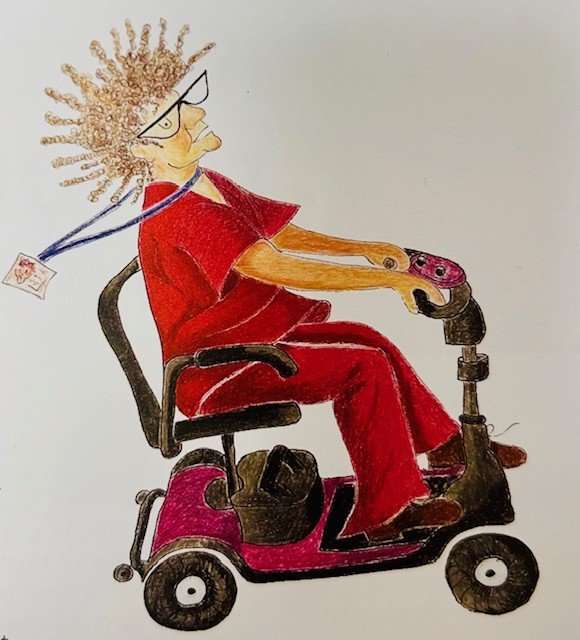
Caroline’s artistic skills were put to good use in this self-portrait
Foundations of Wise Chaplaincy
Essentials for wise chaplaincy—such as compassion, hope, and reverence for human dignity—require deep roots and ongoing nourishment. David Ford (CHCC conference 2016)
These qualities form the bedrock of chaplaincy, shaping the way we engage with those in our care and reminding us of the profound responsibility we hold.
Reflections on Chaplaincy Work
As you may already know, my ministry is as a healthcare chaplain at Royal Devon University Hospital. I feel it is important to share some reflections on chaplaincy, especially considering that many within the Federation serve as chaplains, often quietly and without much recognition. I have placed David Ford’s thought at the start of this piece because it prompts me to question whether we chaplains are as deeply rooted as we ought to be.
Chaplaincy Practice in Healthcare
Healthcare chaplains typically visit patients who have requested a visit or who have been referred by the ward or their church. In my role, I am the lead chaplain for learning difficulties and participate in a weekly multidisciplinary team (MDT) meeting with the palliative care team. I am also involved in a project initiated at Royal Devon University Hospital, which aspires to become an academic paper in the future. This project involves trialling wellbeing visits for every patient who has been in hospital for over 21 days. As a result, patients who might never have asked to see a chaplain are discovering the benefits of such visits—finding support and attentive listening from a staff member not involved in their medical care.
Experiencing God’s Guidance
Wednesdays, though unpredictable, have become a time and place where I feel truly engaged in God’s work throughout the day. I dedicate the day to the Lord, asking Him to lead me to those who need my presence and to provide the words I should say. Each time I go to the hospital, I am amazed by how God works through me in these encounters.
Support and Challenges in Chaplaincy
I consider myself fortunate to work with a team of chaplains who are incredibly supportive. Understandably, some of the situations we are called to support can be both traumatic and tragic. Our office often serves as a space to unwind and leave the weight of the day behind.
In conversations with other chaplains in the Federation, I have come to realise how fortunate I am to have the backing of a supportive team. Others may not have this support or may find it difficult to share certain experiences in their workplaces.
Reflecting on Rootedness and Nourishment
I have been reflecting on the quote at the beginning of this article, considering my own rootedness. While I am firmly grounded within my team, I wonder whether I have that same depth of rootedness within a church family. Over the past year, much of my time has been spent travelling to different churches Preaching and leading Messy Church sessions. I have not had the opportunity to settle with a church family, to sit, listen, and worship, or to experience that continuous nourishment. I suspect that many of us, who spend most Sundays preaching and balancing chaplaincy with church responsibilities, may also struggle to find time for regular spiritual nourishment.
Building Connections Among Chaplains
Perhaps, as chaplains, we could consider meeting together in the coming year to connect and support one another. We might organise a time of worship and sharing—perhaps via Zoom or at the assembly. It would not require a significant commitment, but simply knowing who we are would enable us to provide mutual support.
Blessings to you all.
Rev Caroline Stott
My email is [revcstott@gmail.com], and I am on the phone on 07966 071514. Please contact me, tell me your story.
This article is republished from Refresh magazine of the Congregational Federation, approved by Rev. Caroline Stott.
A chance to join the CoNNECT II online, 12th March 2026
CoNNECT II
Exploring Story: Chaplaincy - Reflection - Research

12th March 2026 · 10:30am - 4:30pm, Lumen United Reformed Church & Community Centre URC, 88 Tavistock Place London WC1H 9RS
Join us for an inspiring opportunity to connect and network, focusing on the power of case studies. Building on the success of the first CoNNECT day, we invite practitioners, educators, researchers, and all those dedicated to advancing chaplaincy and pastoral care in diverse settings. This day is designed for anyone eager to deepen their understanding of chaplaincy, enhance practices across various contexts, and empower chaplains through collaborative research. Visit here for more information and registration.
A chance to join the CoNNECT II online
In addition to the general admission tickets, we have now set up an online-only ticket at £6. You can visit here for more information and registration.
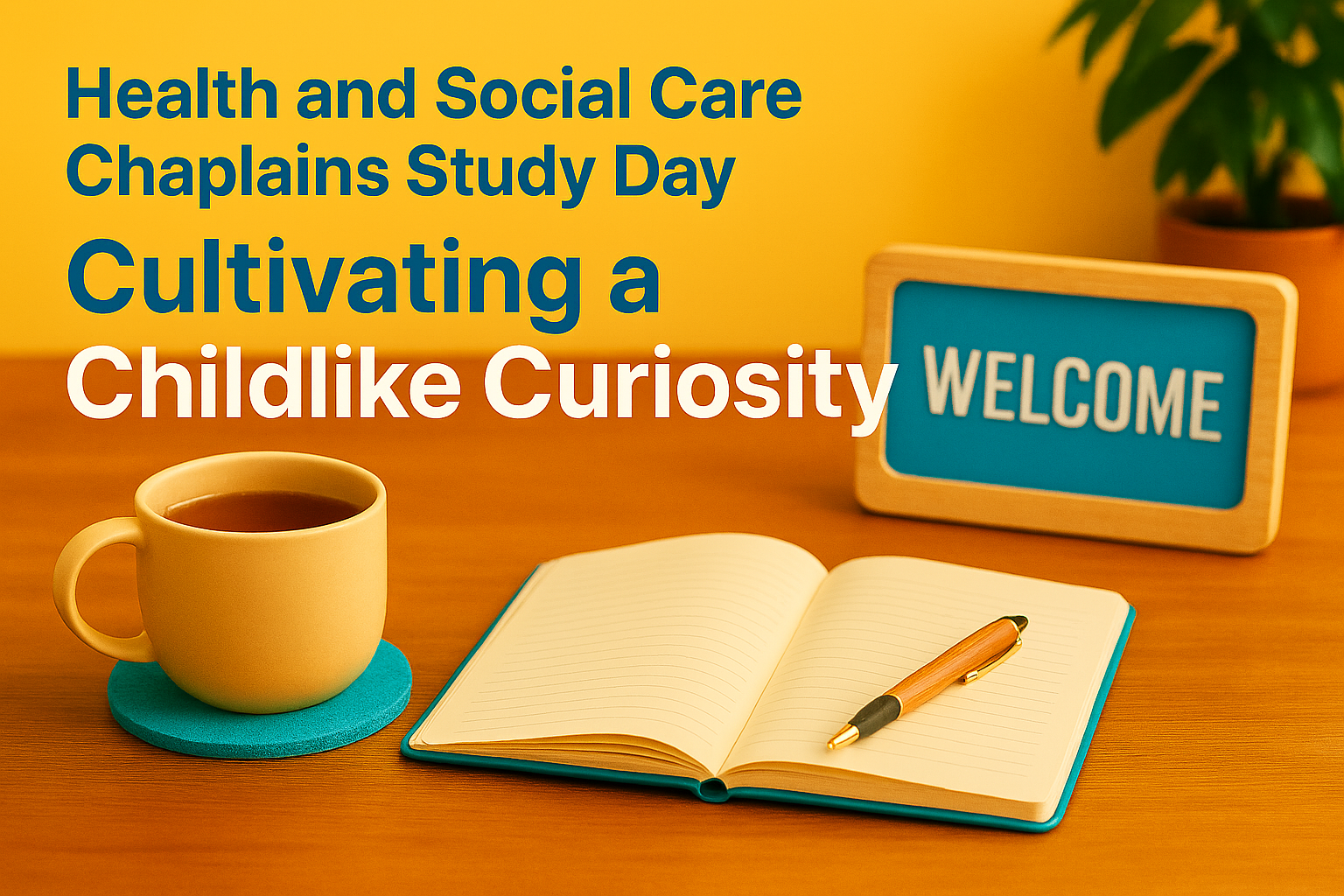
FCG Health and Social Care Chaplains Study Day
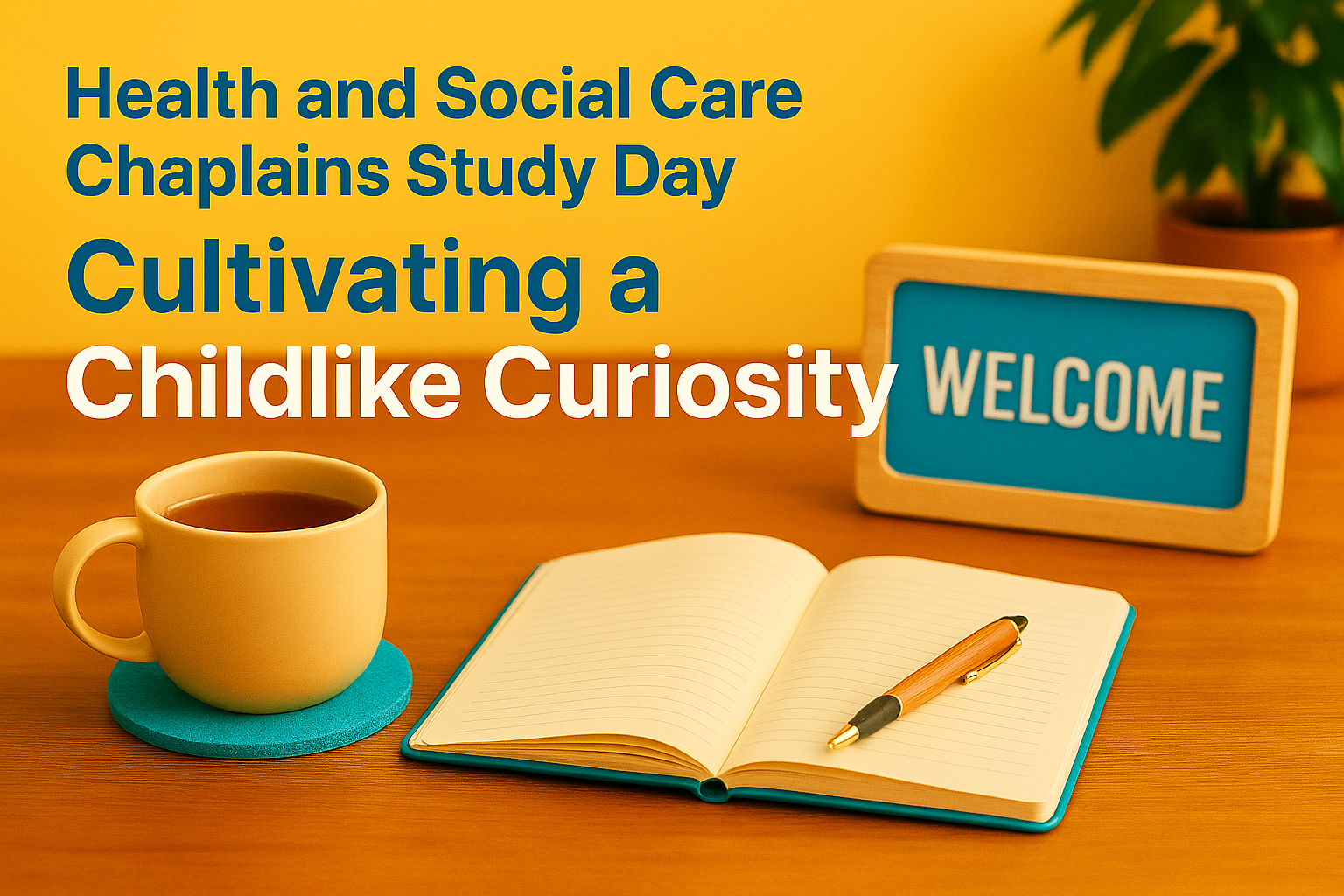
FCG Health and Social Care Chaplains Study Day: Cultivating a Childlike Curiosity
Tuesday 16th June 10:30 to 16:30, Cleaves Conference Centre, 6 Castle Gate, Nottingham NG1 7AS.
This study day, put on for Free Churches Group chaplains but open to all, will feature input from Linda Dunbar and Graham Adams. Linda will provide training around Values Based Reflective Practice, and the Connect, Reflect, Respond reflective practice and/or supervision model. Graham will offer insights from his book God the Child: Small, Weak and Curious Subversions exploring the potential implications for chaplaincy of 'God as Child': How might this metaphor open up different possibilities for us? How might it also cause some disruption and difficulty? In particular, are there insights to be gained from thinking of God as small, as weak and as curious? Could this speak into our care-giving but also to us as childlike chaplains? Together, through the day, Graham and Linda will encourage us to explore how we might cultivate a childlike curiosity as chaplains.
Linda is the founding Director of LSShetland, Practice Educator for NHS Scotland Spiritual Care, the NHS Scotland National Lead for Values Based Reflective Practice, registered Healthcare Chaplain and has recently been appointed as the academic lead director for the UKBHC. Linda devises and delivers on-line and in-person training on supervision, reflective practice and listening skills. Linda has a doctorate in Practical Theology and a PGDip in Pastoral Supervision with the Institute of Pastoral Supervision and Reflective Practice. She is passionate about honouring the inner wisdom inherent within each person and providing a safe, facilitative space and time for people to connect with their own insight.
Graham is Tutor in Mission Studies, World Christianity and Religious Diversity, and programme lead for the postgraduate degrees (n both theology and chaplaincy studies), at Luther King Theological College, Manchester. He also teaches for the Congregational Institute for Practical Theology. He is the author of Holy Anarchy: Dismantling domination, Embodying community, Loving strangeness (SCM, 2022) and God the Child: small, weak and curious subversions (SCM, 2024) and the forthcoming The Anarchic Spirit: Interpreting the Bible and the World in troubled times (SCM, 2026). Before teaching full-time, he was in Congregational ministry in Manchester.