

NEWS
Signpost Services Announces Major Expansion Across the West Midlands

Signpost Services has expanded its nationwide support platform to include comprehensive coverage of services for prisoners and ex‑prisoners across the West Midlands. Chaplains and professionals working with individuals in or from the region can now access information on 500 local organisations offering support with housing, addiction, finances, health, faith communities, and a wide range of rehabilitation needs.
This development builds on Signpost’s existing coverage of London, Manchester, the North East, and Norfolk, strengthening its position as one of the most extensive directories of resettlement support in the country.
With this expansion, the Signpost database now includes 2,200 organisations, including more than 250 services operating nationwide across England and Wales. This enables chaplains and frontline workers to generate personalised “Your Signpost Services” reports for individuals being released into any part of the country.
Founder David Cooke highlighted the importance of maintaining accurate, up‑to‑date information:
“We are now using AI‑driven tools to ensure our data is refreshed regularly. This means chaplains and support workers can rely on Signpost to provide current, trustworthy information at all times.”
Signpost is inviting chaplains and practitioners with recommended service lists for the West Midlands to contribute to the growing directory. Submissions can be sent to contact@signpost.services.
For more information, visit www.signpost.services, where you can also access the one‑page overview Introduction to Signpost.
Contact: contact@signpost.services
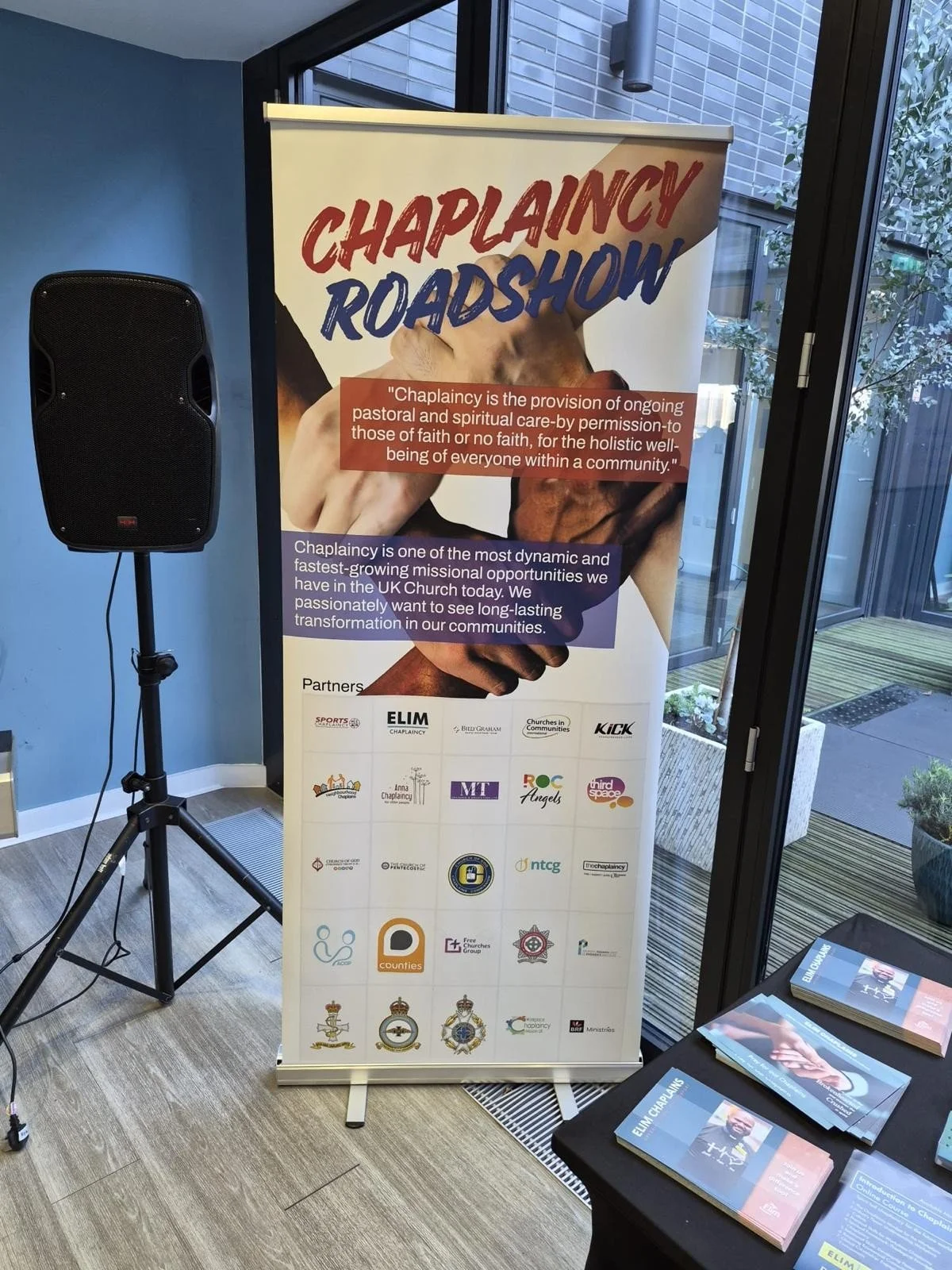
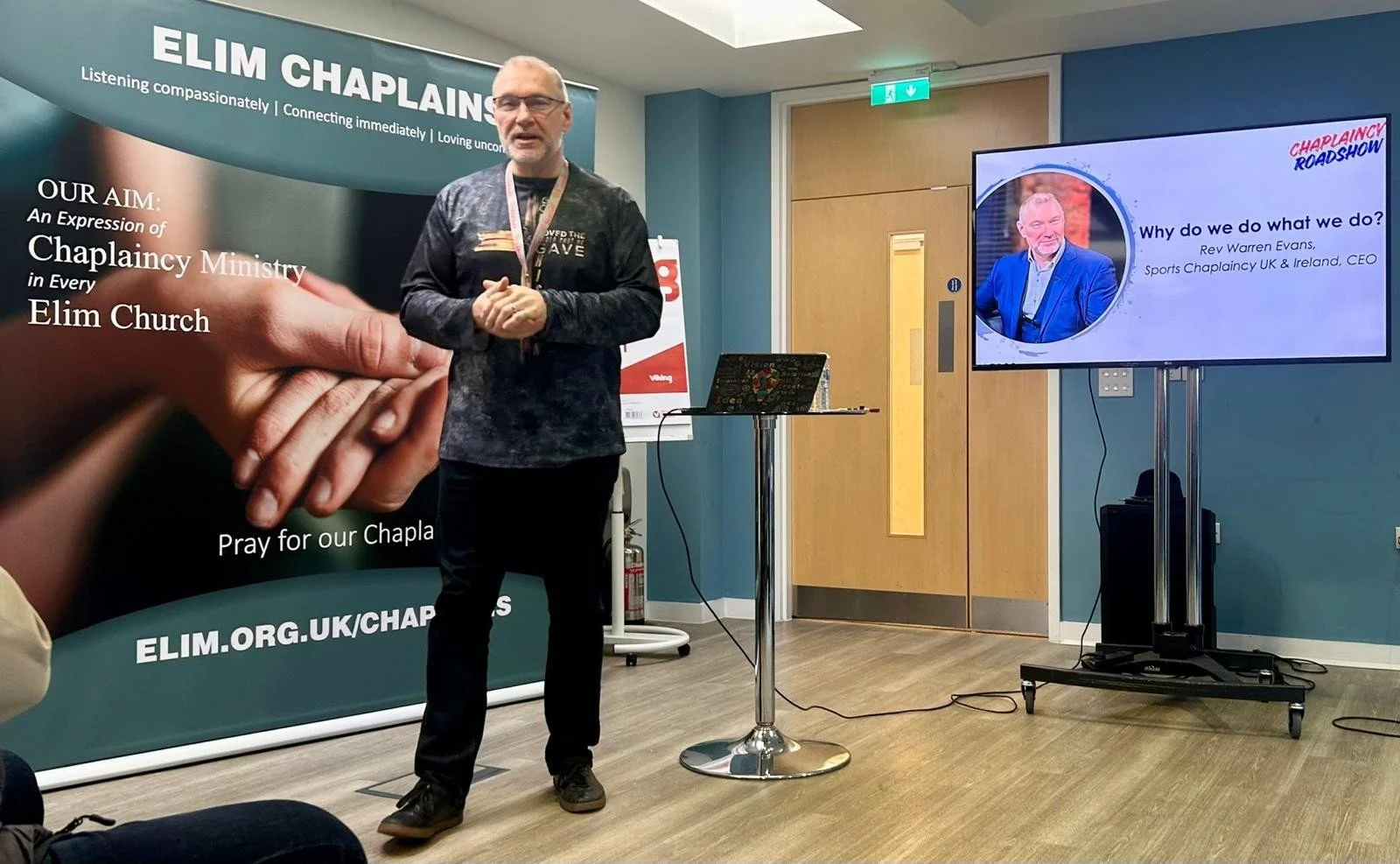
Chaplaincy Roadshow 2026
The Free Church Group partnered with the Chaplaincy's Road Show Tour, and we invited the organisers to give us a report.
Over a coffee, Warren Evans (CEO of Sports Chaplaincy UK) and I imagined how we could showcase Chaplaincy Ministry to the local church. We approached around 20 organisations, who quickly bought into the idea. The Roadshow aimed to inform, inspire and encourage greater involvement, and empower pastors and church members to capture a renewed vision for chaplaincy.
A further motivation to organise the Roadshows was the frequent requests we receive from Prisons. Hospitals, the military, and so on, are requesting more Chaplains. For me, it is somewhat strange and counterintuitive that Chaplaincy still holds currency in the UK. Why would a Premier League FC appoint a chaplain? A further indicator is the expansion of Colleges and Universities offering Chaplain-Training. Chaplaincy is in its ascendancy. How long will this door stay open?
Chaplaincy is increasingly recognised as a vital, post-secular ministry in the UK, shifting from a niche, institutional role (hospitals, military, prisons) to a public-facing, "incarnational" ministry in workplaces, shopping centres, leisure and sports venues. It is considered crucial because it meets people where they are—outside traditional church walls—offering spiritual care in an era characterised by both rapid secularisation and a persistent search for meaning. As traditional church attendance declines, chaplaincy serves as a "bridging" ministry, bringing a spiritual presence into communities. It operates as "the church without walls," where 95% of the people encountered do not regularly attend church.
Here are some results;
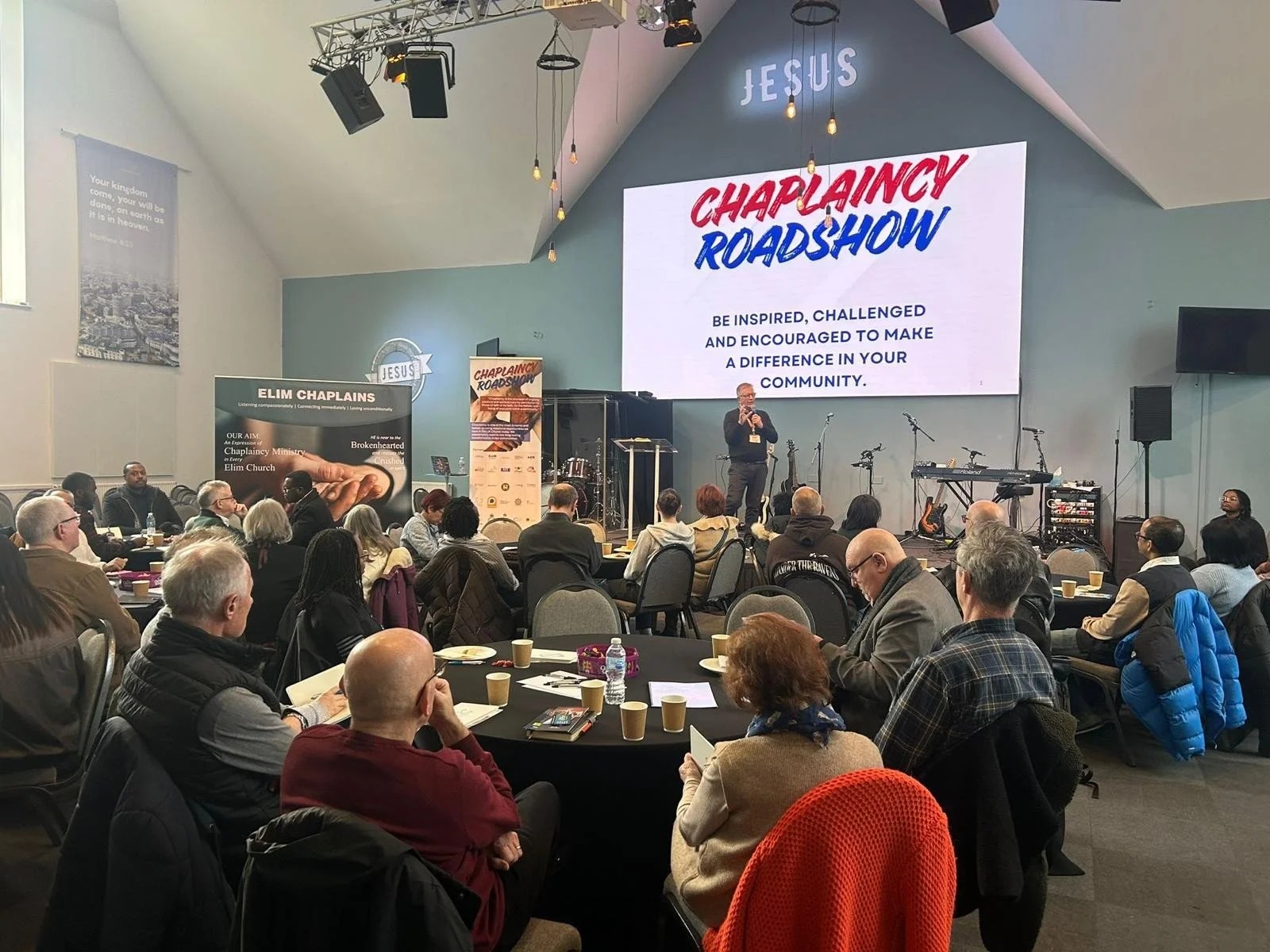
200+ people attended the three roadshows
The buzz and energy in the room were amazing
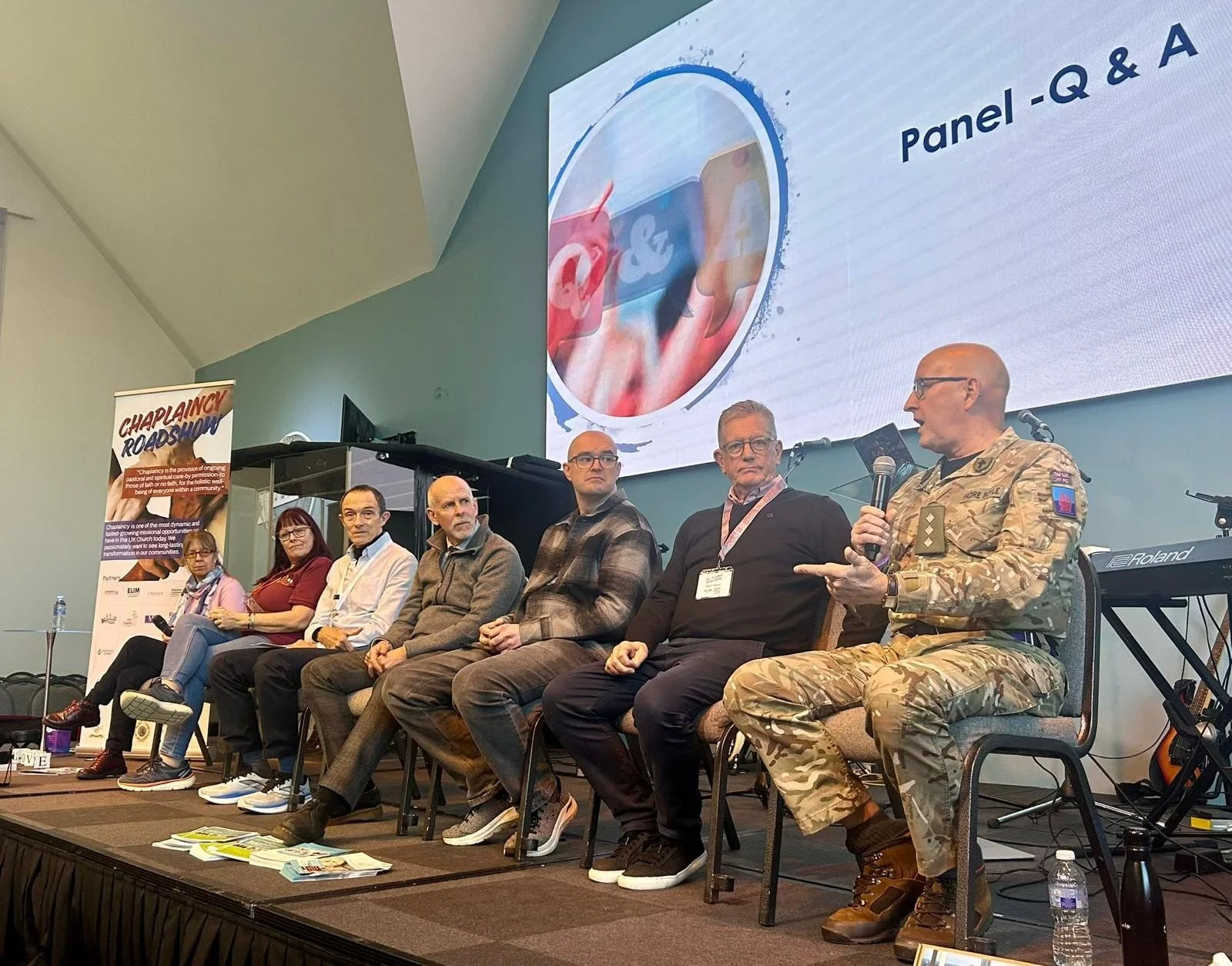
Partner organisations were very positive, and new contacts were made!
The national advertising alone underscored chaplaincy to the Church
London and Birmingham have requested follow-up events!
Cardiff and Newcastle have asked for a Roadshow
When we showcase stories of encounter and community engagement, people are impacted and want to get involved
We saw the power of partnership as different agencies and churches stood together
I lead my denomination’s Chaplaincy Dept; along with many networks and streams, we are convinced that Chaplaincy offers amazing opportunities to share Christ’s Love with those with little or no meaningful connection to a Christian community.
A Very Modern Ministry: Chaplaincy in the UK – Ben Ryan (2015)
At a time when UK society seems increasingly dominated by secular habits and assumptions, and when religious attendance and affiliation seem to be in decline, there are more and more stories of chaplaincy spreading into new settings. No longer – if indeed it was ever the case – are chaplains limited to Anglican clergy in a few institutional settings. Today chaplains are everywhere.
Chaplaincy ministry has its roots in ancient history. Religious men and women often accompanied armies into battle as priests. Chaplains provided encouragement and compassionate care to people who were constantly in crisis. Chaplains sailed with Sir Francis Drake in the sixteenth century and fought with Washington during the Revolutionary War. They have prayed through human suffering, have been encouraged in despair, and have walked alongside humanity at every stage.
Today, chaplains are found in many (perhaps every) settings—healthcare, policing, business, industry, universities, and sport; in fact, placement is limited only by the lack of imagination.
The word chaplain originates in fourth-century France. A traditional story relates the compassion of St. Martin of Tours. One cold and wet night, he was so moved by compassion for a beggar that he shared his cloak. Upon his death, his cape (capella in Latin) was preserved as a holy relic and kept in a shrine that came to be known as chapele, from which the English word chapel is derived. The guardian of the chapel became known as the chaplain.
The phrase “an open door – an effectual open door” is taken from 1 Cor 16:9. The Apostle Paul is ministering in Ephesus. He says that in the face of all the challenges and opposition, there is an incredible ‘Open Door’ of effective mission that has opened to him. The metaphor is clear despite the hardships God has opened doors for effective engagement with society. We are convinced that chaplaincy is God’s gift, God’s open door to the UK Church.
As with any promotional event, we look to the cumulative effect, and pray that in local settings, as pastors and chaplains tell their story at national, regional and local events and as chaplaincy is affirmed, we will see increasing numbers of pastors and church partners called into this vital ministry.
Like the ministry of Jesus, chaplaincy is about being present in specific, sometimes messy sectors of society to provide support. We call this incarnational presence. In summary, chaplaincy in the UK acts as a proactive, adaptable ministry that bridges the gap between faith and society, offering vital human connection to people and communities wherever they are.
We love and honour the pastors and the local church, most of us recognise the pull to ‘inhouse’ ministry, that is we end up giving our best hours and resources to our church-community. Conversely, chaplaincy intentionally focuses 95% of our time and effort outside the local church. Someone said, “Get out on the limb, that’s where the fruit is”.
Does your church community have an active involvement in chaplaincy ministry? We can help you get started.
For Information contact: -
Nigel Tween. Nigel.Tween@outlook.com Director: Elim Chaplaincy Association.
Warren Evans. warren.evans@sportschaplaincy.org.uk CEO: Sports Chaplaincy UK
Rootedness, Support, and Nourishment
Reflections on Chaplaincy by Caroline Stott, President, Congregational Federation
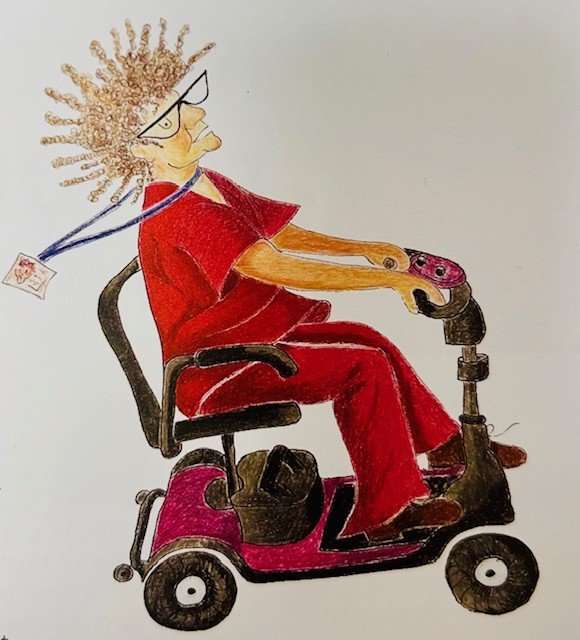
Caroline’s artistic skills were put to good use in this self-portrait
Foundations of Wise Chaplaincy
Essentials for wise chaplaincy—such as compassion, hope, and reverence for human dignity—require deep roots and ongoing nourishment. David Ford (CHCC conference 2016)
These qualities form the bedrock of chaplaincy, shaping the way we engage with those in our care and reminding us of the profound responsibility we hold.
Reflections on Chaplaincy Work
As you may already know, my ministry is as a healthcare chaplain at Royal Devon University Hospital. I feel it is important to share some reflections on chaplaincy, especially considering that many within the Federation serve as chaplains, often quietly and without much recognition. I have placed David Ford’s thought at the start of this piece because it prompts me to question whether we chaplains are as deeply rooted as we ought to be.
Chaplaincy Practice in Healthcare
Healthcare chaplains typically visit patients who have requested a visit or who have been referred by the ward or their church. In my role, I am the lead chaplain for learning difficulties and participate in a weekly multidisciplinary team (MDT) meeting with the palliative care team. I am also involved in a project initiated at Royal Devon University Hospital, which aspires to become an academic paper in the future. This project involves trialling wellbeing visits for every patient who has been in hospital for over 21 days. As a result, patients who might never have asked to see a chaplain are discovering the benefits of such visits—finding support and attentive listening from a staff member not involved in their medical care.
Experiencing God’s Guidance
Wednesdays, though unpredictable, have become a time and place where I feel truly engaged in God’s work throughout the day. I dedicate the day to the Lord, asking Him to lead me to those who need my presence and to provide the words I should say. Each time I go to the hospital, I am amazed by how God works through me in these encounters.
Support and Challenges in Chaplaincy
I consider myself fortunate to work with a team of chaplains who are incredibly supportive. Understandably, some of the situations we are called to support can be both traumatic and tragic. Our office often serves as a space to unwind and leave the weight of the day behind.
In conversations with other chaplains in the Federation, I have come to realise how fortunate I am to have the backing of a supportive team. Others may not have this support or may find it difficult to share certain experiences in their workplaces.
Reflecting on Rootedness and Nourishment
I have been reflecting on the quote at the beginning of this article, considering my own rootedness. While I am firmly grounded within my team, I wonder whether I have that same depth of rootedness within a church family. Over the past year, much of my time has been spent travelling to different churches Preaching and leading Messy Church sessions. I have not had the opportunity to settle with a church family, to sit, listen, and worship, or to experience that continuous nourishment. I suspect that many of us, who spend most Sundays preaching and balancing chaplaincy with church responsibilities, may also struggle to find time for regular spiritual nourishment.
Building Connections Among Chaplains
Perhaps, as chaplains, we could consider meeting together in the coming year to connect and support one another. We might organise a time of worship and sharing—perhaps via Zoom or at the assembly. It would not require a significant commitment, but simply knowing who we are would enable us to provide mutual support.
Blessings to you all.
Rev Caroline Stott
My email is [revcstott@gmail.com], and I am on the phone on 07966 071514. Please contact me, tell me your story.
This article is republished from Refresh magazine of the Congregational Federation, approved by Rev. Caroline Stott.
Easter Message from the FCG Moderator

To the Free Churches Community,
Resurrection greetings to you in the name of God — Creator, Christ, and Comforter — Father, Son and Holy Spirit.
“Peace be with you. As the Father has sent me, I am sending you” (John 20:21 NIV).
Easter dawns as God’s decisive act of new creation. Before fear can organise itself, before grief can settle into permanence, before the powers of death can declare victory, God calls life out of the tomb and opens a future that had been sealed shut.
Mary Magdalene meets the risen Christ in a garden — a deliberate echo of the first garden, the place where human vocation began. Resurrection is the renewal of creation itself, and not simply the reversal of death. The risen Christ stands as the gardener of a remade world, cultivating life where loss seemed to have the final word.
The marks of crucifixion remain visible, as signs of costly love that endures rather than of defeat. In God, wounded bodies are honoured, remembered, and transformed into testimony. What human cruelty attempted to silence becomes a proclamation.
“Peace be with you”. When the risen Christ speaks peace, it is of a peace rooted in history — a peace that restores relationship, heals memory, and gathers scattered people into community. It steadies hearts, reorders priorities, and makes courage possible again.
Then Christ breathes. The breath of God that animated the first human being moves once more through fragile lives. This is creative, sustaining, empowering breath — the Spirit who kindles imagination, strengthens resolve, and calls communities into being. Resurrection is therefore the birth of a Spirit-filled people entrusted with God’s future.
“As the Father has sent me, I am sending you”. Easter immediately becomes mission. Those who encounter the risen Christ are drawn into the work of repair — mending what has been torn, restoring what has been diminished, building communities shaped by justice, mercy, and faithful love. Resurrection faith wholeheartedly rejects passivity. It moves outward, seeking the flourishing of all.
In our world, where many experience uncertainty, displacement, and profound strain, Easter proclaims that life can still emerge in unexpected places. Seeds take root underground long before they break the surface. Communities rediscover strength even after seasons of exhaustion. Hope often begins quietly, gathering momentum before it becomes visible.
As Free Churches, shaped by traditions of conscience, courage, and commitment to the common good, we are called to embody this resurrection life in public as well as personal ways. Our witness matters. Our service matters. Our refusal to surrender compassion matters. Wherever we stand alongside those whose dignity is threatened, wherever we work for reconciliation, wherever we nurture belonging, signs of resurrection appear.
Friends, Easter assures us that God’s future is already unfolding among us. The risen Christ meets people on ordinary roads, in familiar places, within communities that are still learning how to hope again. Resurrection is not distant from daily life, it is woven into it, energising faithful action and sustaining courageous love.
So we live as resurrection people who recognise possibility where others see closure, who cultivate peace amid turbulence, who trust that God continues to call life forth from every place that feels unfruitful.
Photo by Kelly Sikkema on Unsplash
Christ is risen, and with Christ the world is invited into renewal.
Christ is risen, and with Christ communities can be rebuilt.
Christ is risen, and with Christ hope becomes a living force.
May the joy of Easter strengthen us.
May the breath of the Spirit renew us.
May the peace of the risen Christ flow through us into the life of the world.
And may we recognise, even now, the signs of God’s new Creation unfolding around us.
With every blessing this Easter,
Revd Dr Tessa Henry-Robinson
Moderator, Free Churches Group
The Investing Together Values

VALUE: Intentionally include the gifts and contributions of children and young people as equal partners and participants in God’s Kingdom, investing time and resources to reflect this.
ENGAGE: Adjust infrastructures and systems to enable the voice and participation of children and young people to be genuinely equipped in the local and national church, ensuring opportunities for them to shape how we join in God’s mission.
COLLABORATE: Work together across perceived divides, creating inter-cultural, inter-generational and ecumenical connections so that children and young people truly feel part of God’s wider church. We want to see everyone playing a part in God’s mission to those around us.
The invitation to invest together was launched on 23rd March, and you can find the video of the launch here .
A website is being developed, but an introductory document can be found HERE.
We very much hope that member churches will:
a. Add your name to this invitation to the church, so that we can collectively ask them to more intentionally move towards these values.
b. Share any stories to inspire or other resources, so that we can add them to the webpage once it’s ready.
c. Get in touch with any queries or suggestions.
If you’d like to know more, please contact Sarah Lane Cawte: sarah.lane.cawte@ freechurches.org.uk
Or Sarah Holmes: sarah.holmes@cym.ac.uk