

NEWS
CoNNECT III: How To Train Your Chaplain
Thursday, March 4, 2027 • 10 AM - 4:30 PM

University of Roehampton London, Roehampton Ln, London SW15 5PH
What are the knowledge, skills and behaviours that chaplains should develop and inhabit across the different contexts they work in?
Expert pastoral, spiritual and religious care requires ways of being that are difficult to define. The use of self and need for professional formation, including deep reflection and personal exploration, make it hard to break a chaplain’s work down into a series of capabilities or interventions, as might be done with other health care professionals.
As with previous CoNNECT days, our aim is to bring together practitioners, educators, researchers, and those involved in supporting, developing, and providing chaplaincy and pastoral care across different contexts. The programme offers time to talk informally with others and to build connections across different chaplaincy contexts - to connect and learn from one another.
Taking in views from across those different perspectives, the day aims to investigate the knowledge, skills and behaviour that a chaplain might be expected to develop or inhabit, exploring where this is shared language and where there are differences. Our speakers for the day are:
Kate Bruce – Kate is a Chaplain in the Royal Air Force and currently an RAF Instructor at the Armed Forces. Chaplaincy Centre. Having read English and Religious Studies at the University of Leeds and taught English at secondary school in Yorkshire, she later trained for ordination, serving in Ripon and Durham. She obtained a PhD in homiletics in 2013 from the University of Durham, and Igniting the Heart is based on her thesis Kate has been chaplain to three of the Durham colleges, Van Mildert, Trevelyan and St John’s and has also been Tutor in Homiletics and Deputy Warden at Cranmer Hall, St John’s, of which she remains an Honorary Visiting Fellow. Kate has been instrumental in establishing the Durham Preaching Conferences, aimed at fostering and promoting good preaching, and she continues to lead other preaching workshops. In 2021 and 2024, Kate published, in two volumes with Liz Shercliff, Out of the Shadows: Preaching the Women of the Bible, exploring how women, often marginalised in biblical narratives, can be viewed anew and have their stories communicated better. Outside academia and ministry, Kate has written and performed in stand-up comedy and has appeared at the Edinburgh Fringe.
Mark Evans - Mark started his working life as a staff nurse within surgical high dependency and ITU in NHS Lothian and has since worked in a variety of health and social care settings. For the past 20 years, he was Head of Spiritual Care and Bereavement Lead for NHS Fife. Mark was then appointed the National Lead and Professional Advisor for Spiritual Care within the Scottish Government. Recently Mark was appointed Head of Service for Spiritual Care & Bereavement Lead in NHS Lothian and continues as a Professional Advisor to the Scottish Government.
Andrew Parker - Since 2019, Andrew has served as Professor of Sports Ministry at Ridley Hall, Cambridge where he teaches and supervises students across the sports ministry/chaplaincy spectrum. Between 2008-2018 he was Professor of Sport and Christian Outreach at the University of Gloucestershire. Prior to this he was Associate Professor in the Faculty of Social Sciences at the University of Warwick (1999-2008) where he completed his PhD (1992-1997). Alongside his duties at Ridley, Andrew is currently Honorary Professor in the Department of Health at the University of Bath, and Visiting Professor in the College of Business and Law at the University of the West of England (UWE). With over 200 published articles, working papers and commissioned reports to his name (including 12 co/edited books), he is an established international scholar whose work is accessible to a wide audience. Andrew’s research interests centre around sports ministry and chaplaincy, and sport and marginalised youth.
With our tongues somewhat in cheek, part of the day will ask whether the ability to make a cup of tea/coffee is an essential chaplaincy skill. As part of that, we’d love to have several short stories as part of the day where the offering of a cuppa led to the deepening of a pastoral care opportunity. Please let us know if you’ve such a story you’d like to share.
The day will run from 10:00 for gathering and conversations with the first session at 10:45. The day will finish by 16:30.
The day will cost £50, reduced to £35 for FCG members. Please contact Thandar at thandar.tun@freechurches.org.uk for a discount code, including your name, position, and denomination.
Emerging Funeral Practice and Implications for Ministry

Joint Liturgical Group of Great Britain, Tuesday, Apr 21, from 7:30 pm to 9 pm
Examining contemporary developments in funeral practice and their significance for Christian Ministry. Bringing together leading scholars and practitioners in the field of death, ritual and bereavement studies, this conference will provide both historical context and critical analysis of emerging trends. Click here for more information and register your place here.
A link to the conference will be sent by email approximately 24 hours before the scheduled start time. If you require further information, contact us at jlgevents@outlook.com
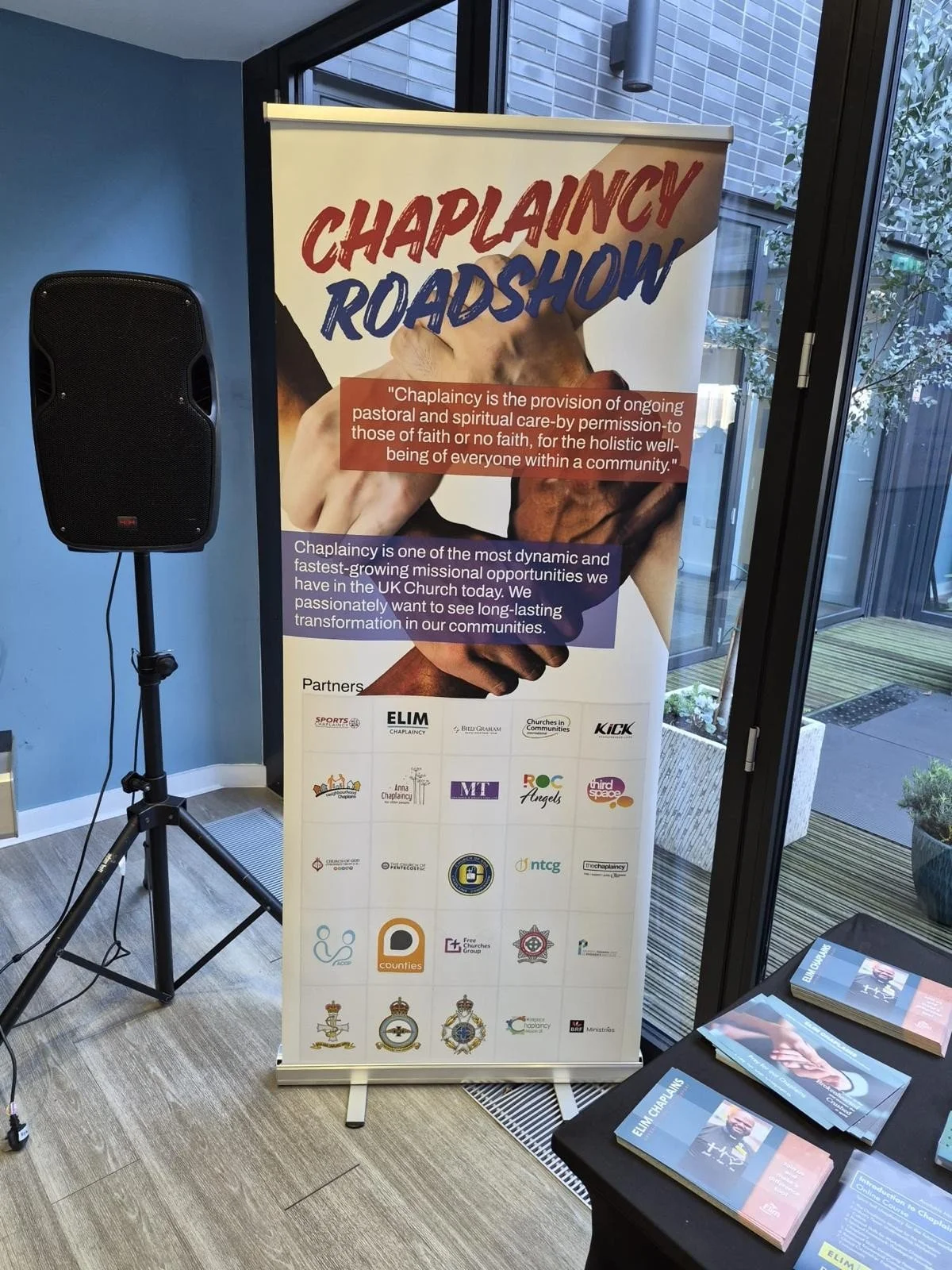
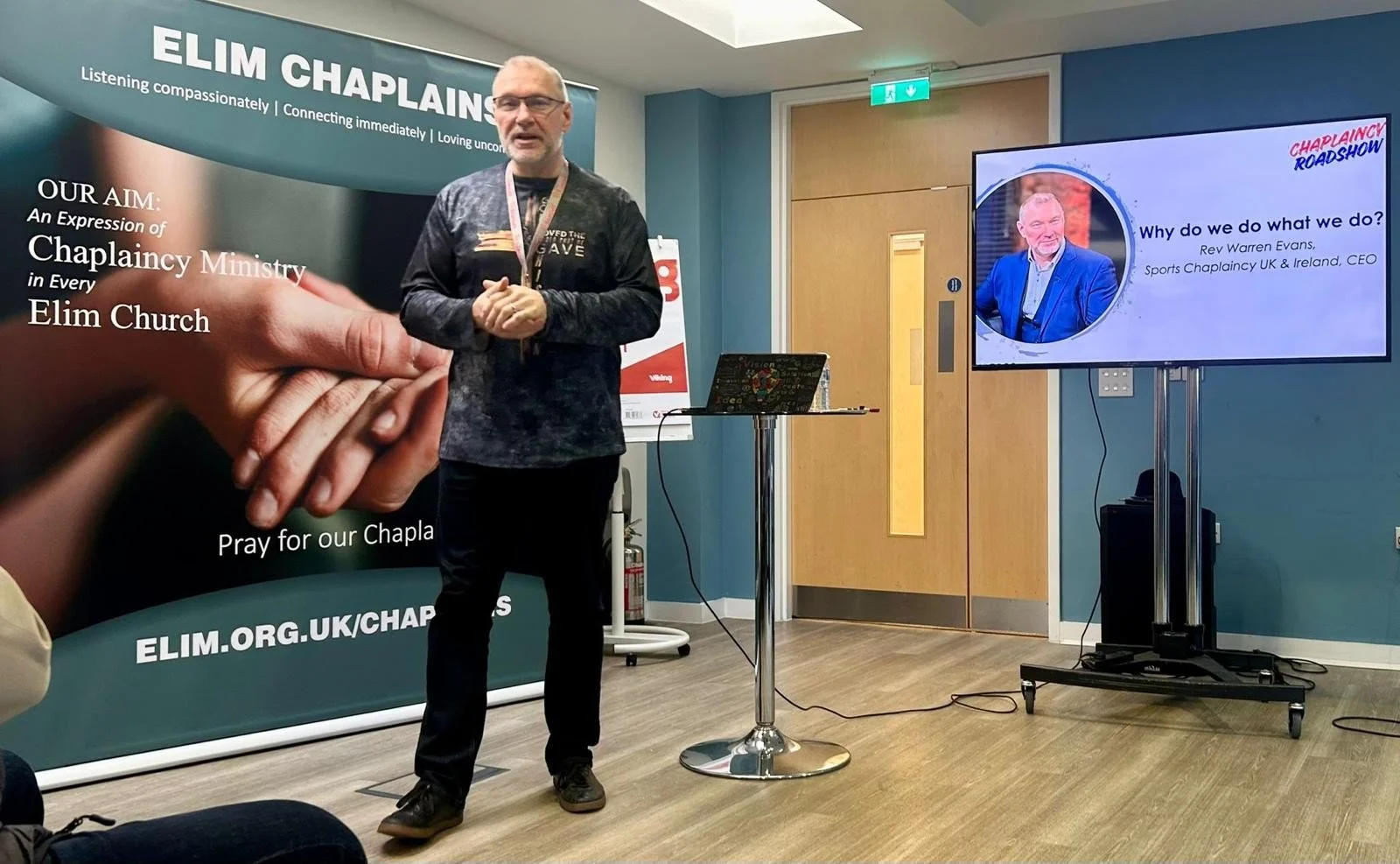
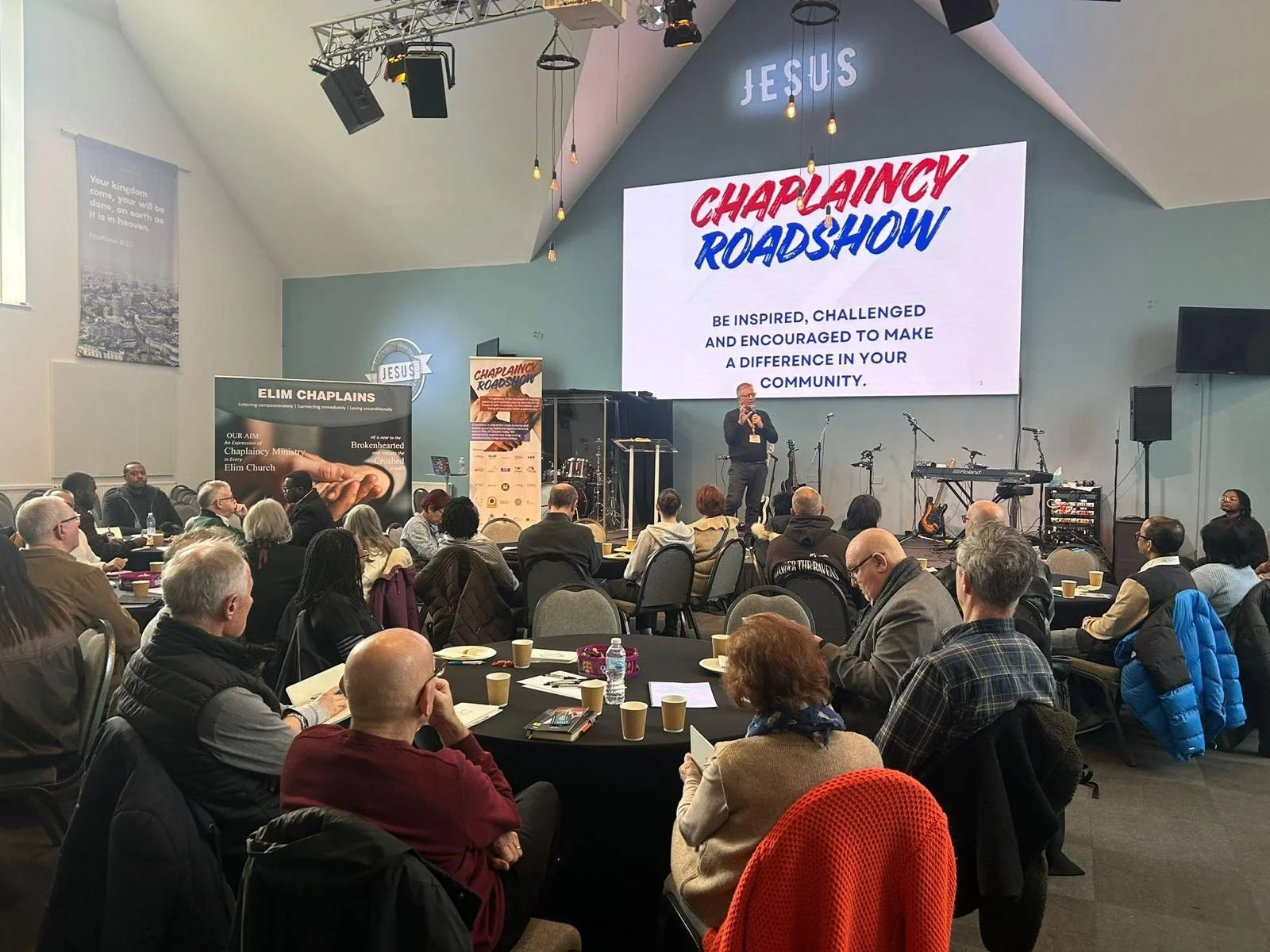
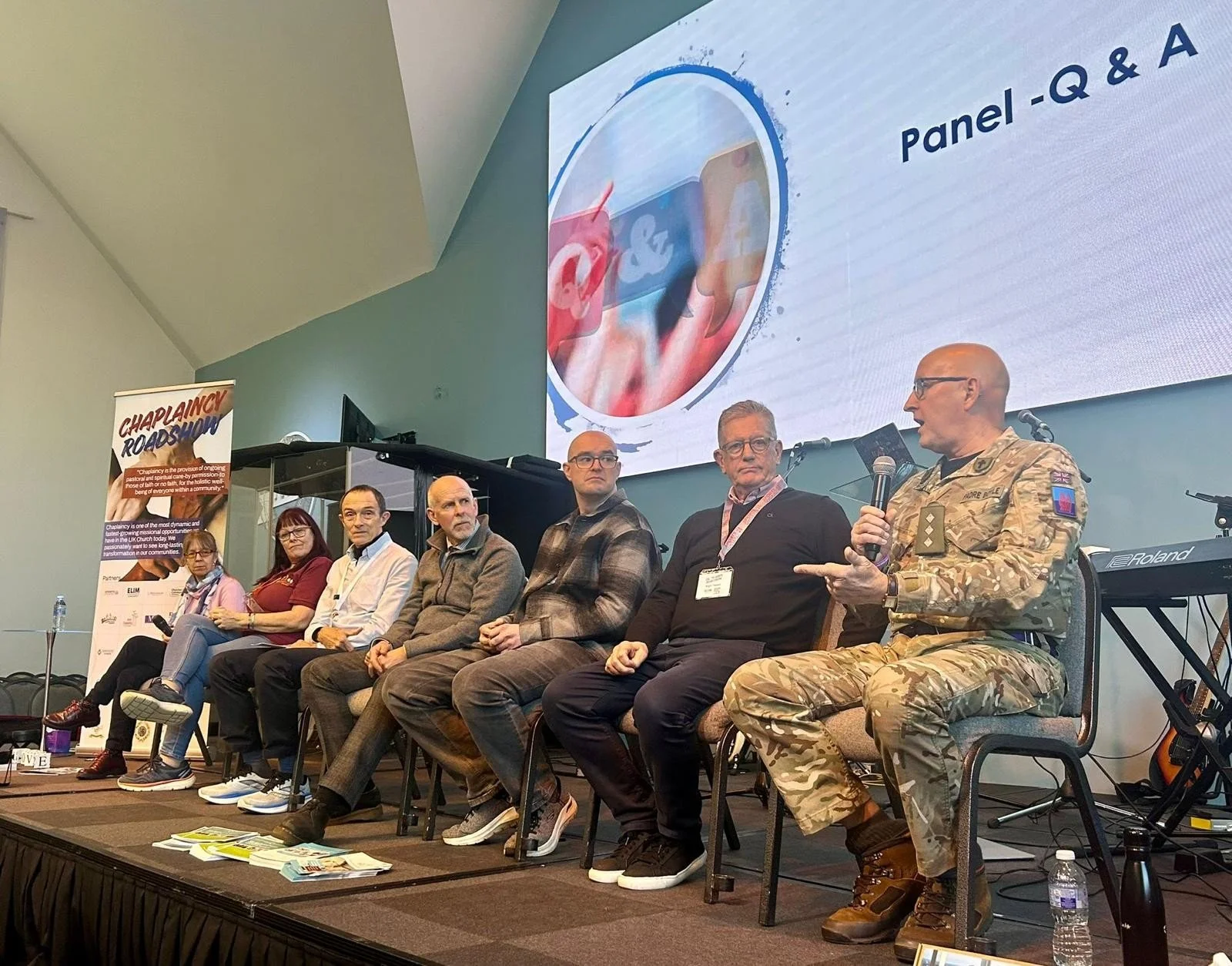
Chaplaincy Roadshow 2026
The Free Church Group partnered with the Chaplaincy's Road Show Tour, and we invited the organisers to give us a report.
Over a coffee, Warren Evans (CEO of Sports Chaplaincy UK) and I imagined how we could showcase Chaplaincy Ministry to the local church. We approached around 20 organisations, who quickly bought into the idea. The Roadshow aimed to inform, inspire and encourage greater involvement, and empower pastors and church members to capture a renewed vision for chaplaincy.
A further motivation to organise the Roadshows was the frequent requests we receive from Prisons. Hospitals, the military, and so on, are requesting more Chaplains. For me, it is somewhat strange and counterintuitive that Chaplaincy still holds currency in the UK. Why would a Premier League FC appoint a chaplain? A further indicator is the expansion of Colleges and Universities offering Chaplain-Training. Chaplaincy is in its ascendancy. How long will this door stay open?
Chaplaincy is increasingly recognised as a vital, post-secular ministry in the UK, shifting from a niche, institutional role (hospitals, military, prisons) to a public-facing, "incarnational" ministry in workplaces, shopping centres, leisure and sports venues. It is considered crucial because it meets people where they are—outside traditional church walls—offering spiritual care in an era characterised by both rapid secularisation and a persistent search for meaning. As traditional church attendance declines, chaplaincy serves as a "bridging" ministry, bringing a spiritual presence into communities. It operates as "the church without walls," where 95% of the people encountered do not regularly attend church.
Here are some results;
200+ people attended the three roadshows
The buzz and energy in the room were amazing
Partner organisations were very positive, and new contacts were made!
The national advertising alone underscored chaplaincy to the Church
London and Birmingham have requested follow-up events!
Cardiff and Newcastle have asked for a Roadshow
When we showcase stories of encounter and community engagement, people are impacted and want to get involved
We saw the power of partnership as different agencies and churches stood together
I lead my denomination’s Chaplaincy Dept; along with many networks and streams, we are convinced that Chaplaincy offers amazing opportunities to share Christ’s Love with those with little or no meaningful connection to a Christian community.
A Very Modern Ministry: Chaplaincy in the UK – Ben Ryan (2015)
At a time when UK society seems increasingly dominated by secular habits and assumptions, and when religious attendance and affiliation seem to be in decline, there are more and more stories of chaplaincy spreading into new settings. No longer – if indeed it was ever the case – are chaplains limited to Anglican clergy in a few institutional settings. Today chaplains are everywhere.
Chaplaincy ministry has its roots in ancient history. Religious men and women often accompanied armies into battle as priests. Chaplains provided encouragement and compassionate care to people who were constantly in crisis. Chaplains sailed with Sir Francis Drake in the sixteenth century and fought with Washington during the Revolutionary War. They have prayed through human suffering, have been encouraged in despair, and have walked alongside humanity at every stage.
Today, chaplains are found in many (perhaps every) settings—healthcare, policing, business, industry, universities, and sport; in fact, placement is limited only by the lack of imagination.
The word chaplain originates in fourth-century France. A traditional story relates the compassion of St. Martin of Tours. One cold and wet night, he was so moved by compassion for a beggar that he shared his cloak. Upon his death, his cape (capella in Latin) was preserved as a holy relic and kept in a shrine that came to be known as chapele, from which the English word chapel is derived. The guardian of the chapel became known as the chaplain.
The phrase “an open door – an effectual open door” is taken from 1 Cor 16:9. The Apostle Paul is ministering in Ephesus. He says that in the face of all the challenges and opposition, there is an incredible ‘Open Door’ of effective mission that has opened to him. The metaphor is clear despite the hardships God has opened doors for effective engagement with society. We are convinced that chaplaincy is God’s gift, God’s open door to the UK Church.
As with any promotional event, we look to the cumulative effect, and pray that in local settings, as pastors and chaplains tell their story at national, regional and local events and as chaplaincy is affirmed, we will see increasing numbers of pastors and church partners called into this vital ministry.
Like the ministry of Jesus, chaplaincy is about being present in specific, sometimes messy sectors of society to provide support. We call this incarnational presence. In summary, chaplaincy in the UK acts as a proactive, adaptable ministry that bridges the gap between faith and society, offering vital human connection to people and communities wherever they are.
We love and honour the pastors and the local church, most of us recognise the pull to ‘inhouse’ ministry, that is we end up giving our best hours and resources to our church-community. Conversely, chaplaincy intentionally focuses 95% of our time and effort outside the local church. Someone said, “Get out on the limb, that’s where the fruit is”.
Does your church community have an active involvement in chaplaincy ministry? We can help you get started.
For Information contact: -
Nigel Tween. Nigel.Tween@outlook.com Director: Elim Chaplaincy Association.
Warren Evans. warren.evans@sportschaplaincy.org.uk CEO: Sports Chaplaincy UK
Easter Message from the FCG Moderator

To the Free Churches Community,
Resurrection greetings to you in the name of God — Creator, Christ, and Comforter — Father, Son and Holy Spirit.
“Peace be with you. As the Father has sent me, I am sending you” (John 20:21 NIV).
Easter dawns as God’s decisive act of new creation. Before fear can organise itself, before grief can settle into permanence, before the powers of death can declare victory, God calls life out of the tomb and opens a future that had been sealed shut.
Mary Magdalene meets the risen Christ in a garden — a deliberate echo of the first garden, the place where human vocation began. Resurrection is the renewal of creation itself, and not simply the reversal of death. The risen Christ stands as the gardener of a remade world, cultivating life where loss seemed to have the final word.
The marks of crucifixion remain visible, as signs of costly love that endures rather than of defeat. In God, wounded bodies are honoured, remembered, and transformed into testimony. What human cruelty attempted to silence becomes a proclamation.
“Peace be with you”. When the risen Christ speaks peace, it is of a peace rooted in history — a peace that restores relationship, heals memory, and gathers scattered people into community. It steadies hearts, reorders priorities, and makes courage possible again.
Then Christ breathes. The breath of God that animated the first human being moves once more through fragile lives. This is creative, sustaining, empowering breath — the Spirit who kindles imagination, strengthens resolve, and calls communities into being. Resurrection is therefore the birth of a Spirit-filled people entrusted with God’s future.
“As the Father has sent me, I am sending you”. Easter immediately becomes mission. Those who encounter the risen Christ are drawn into the work of repair — mending what has been torn, restoring what has been diminished, building communities shaped by justice, mercy, and faithful love. Resurrection faith wholeheartedly rejects passivity. It moves outward, seeking the flourishing of all.
In our world, where many experience uncertainty, displacement, and profound strain, Easter proclaims that life can still emerge in unexpected places. Seeds take root underground long before they break the surface. Communities rediscover strength even after seasons of exhaustion. Hope often begins quietly, gathering momentum before it becomes visible.
As Free Churches, shaped by traditions of conscience, courage, and commitment to the common good, we are called to embody this resurrection life in public as well as personal ways. Our witness matters. Our service matters. Our refusal to surrender compassion matters. Wherever we stand alongside those whose dignity is threatened, wherever we work for reconciliation, wherever we nurture belonging, signs of resurrection appear.
Friends, Easter assures us that God’s future is already unfolding among us. The risen Christ meets people on ordinary roads, in familiar places, within communities that are still learning how to hope again. Resurrection is not distant from daily life, it is woven into it, energising faithful action and sustaining courageous love.
So we live as resurrection people who recognise possibility where others see closure, who cultivate peace amid turbulence, who trust that God continues to call life forth from every place that feels unfruitful.
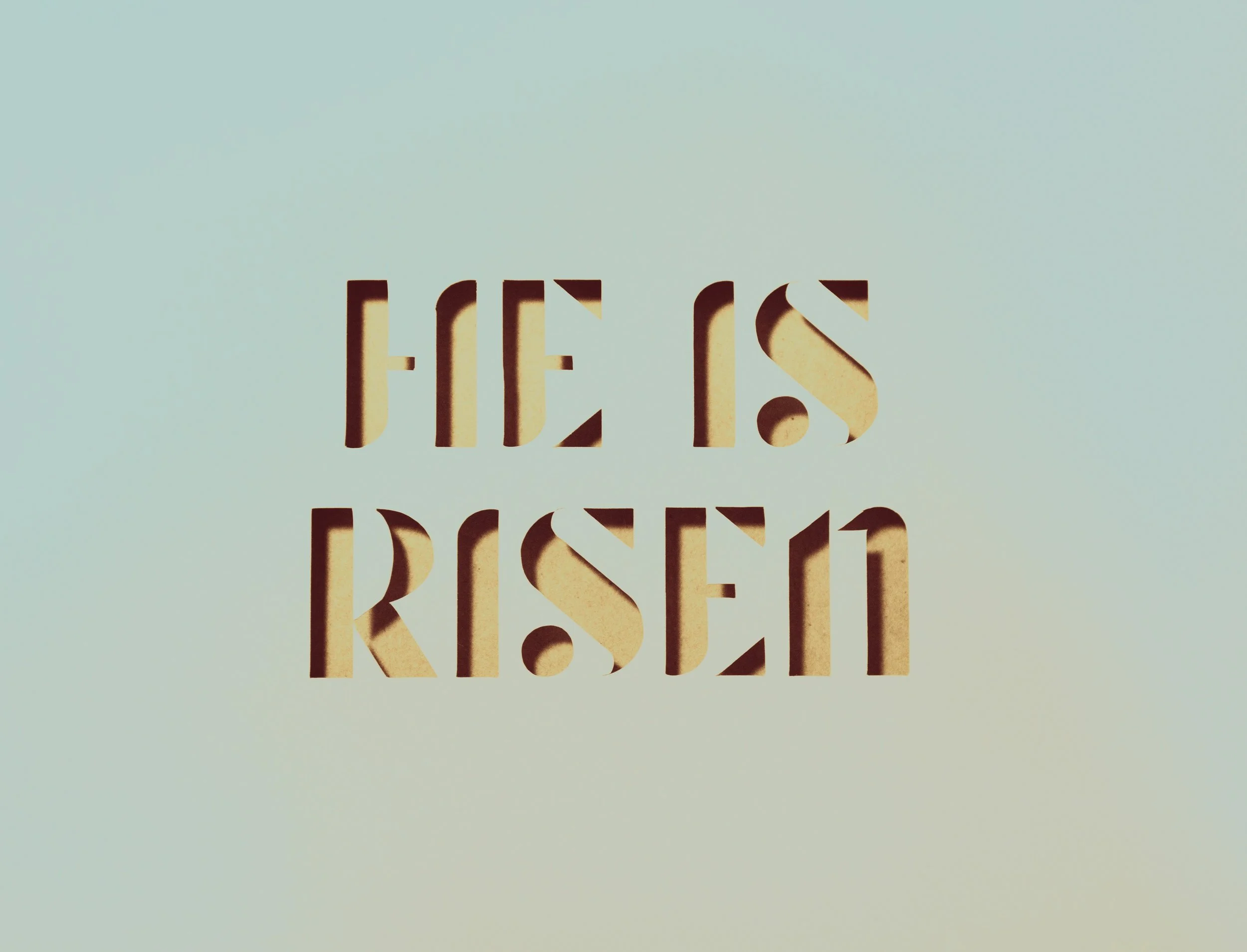
Photo by Kelly Sikkema on Unsplash
Christ is risen, and with Christ the world is invited into renewal.
Christ is risen, and with Christ communities can be rebuilt.
Christ is risen, and with Christ hope becomes a living force.
May the joy of Easter strengthen us.
May the breath of the Spirit renew us.
May the peace of the risen Christ flow through us into the life of the world.
And may we recognise, even now, the signs of God’s new Creation unfolding around us.
With every blessing this Easter,
Revd Dr Tessa Henry-Robinson
Moderator, Free Churches Group
Exploring Chaplaincy in the Armed Forces
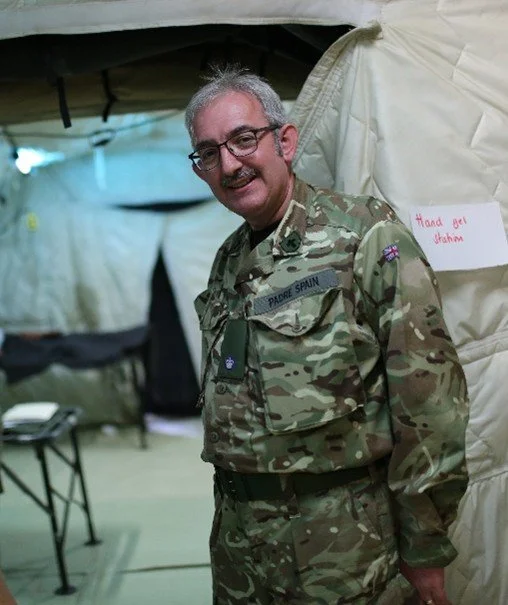
Revd Martin Spain
Healthcare chaplains possess skills and experience that are highly valued within the armed forces.
Could this be an opportunity for you?
Read insights from a serving military chaplain to learn more about this unique ministry context.
Serving in Two Worlds: Chaplaincy in the NHS and 203 (Welsh) Multi‑Role Medical Regiment
My ministry as an NHS chaplain in Wales places me alongside patients, families, and staff at moments of profound vulnerability and resilience. It is a ministry of presence — listening, supporting, and helping people navigate fear, hope, loss, and meaning.
That same calling extends into my role as chaplain to 203 (Welsh) Multi Role Medical Regiment, formerly known as the Field Hospital, where I support reservists who balance demanding civilian healthcare roles with the responsibilities of military service. Whether on training weekends, annual exercises, or during periods of operational readiness, chaplains accompany personnel through the pressures, camaraderie, ethical complexity, and deep sense of purpose that shape military life.
For healthcare chaplains, military chaplaincy — especially within medical regiments — can feel like a natural extension of the work you already do. Your understanding of clinical environments, pastoral nuance, and the emotional landscape of healthcare teams is deeply valued in the Armed Forces. But the invitation is broader: chaplains are needed across the Royal Navy, Army, and Royal Air Force, offering spiritual care, moral guidance, and a steady presence to service personnel and their families.
Becoming a reservist chaplain requires a minimum commitment of 27 days a year, including a continuous period at an annual training exercise. Many NHS organisations actively support their staff who serve as reservists, recognising the leadership, resilience, and pastoral skills they bring back into the health service. Those interested can explore more at the Free Churches Group chaplaincy hub page.
Revd Martin Spain is the Ecumenical Officer for the United Reformed Church in Wales, a hospital chaplain at Withybush General Hospital and has served as the ‘Padre’ to the Welsh MMR for over 16 years.